
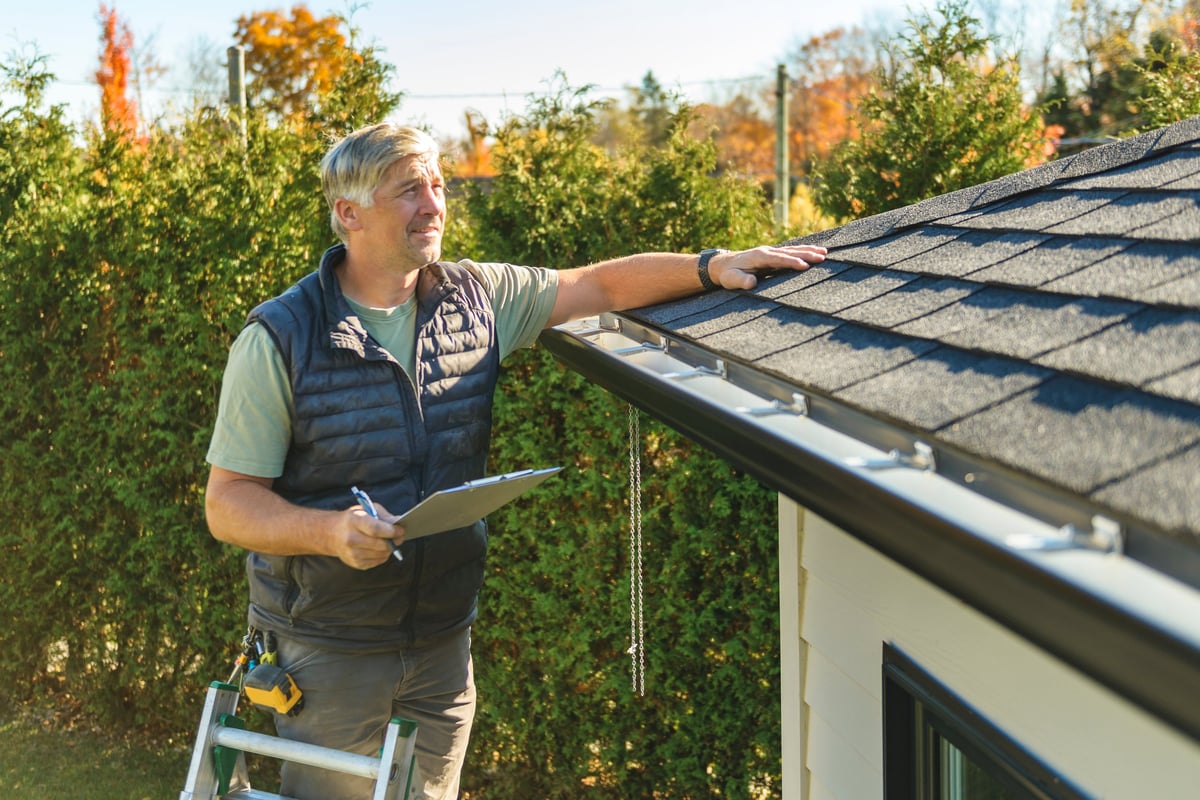
Hail and high winds can damage a roof long before a leak shows up inside your home. Knowing what to look for after a storm helps you act quickly and protect what matters most.
01
On Shingles: Look for Bruises & Dents
Fresh hail damage often looks like a dark bruise or a soft, dimpled spot on the shingle — not always a visible crack. Run your hand lightly over the surface; a bruised shingle loses granules and has a spongy feel. Impact-resistant and older shingles behave differently, so when in doubt, have a pro look.
02
On Gutters & Downspouts: Check for Dents
Hail that's strong enough to dent gutters and downspouts was likely hard enough to damage your roof too. Visible dings, popped seams, and loosened hangers are all clues worth taking seriously, even if the roof itself looks fine from the ground.
03
On Flashing & Vents: Look for Lifted or Broken Pieces
Wind can lift flashing, bend pipe boots, or knock vent covers askew. These small gaps let water in right where your roof meets walls and penetrations — so a bent pipe boot is a real reason to call for an inspection.
04
Know the Size of the Hail Matters
In general, hail around or larger than one inch in diameter (about the size of a quarter) is more likely to damage asphalt shingles. But timing, shingle age, and wind all play a role — so size alone isn't the whole story.
05
Check Attics & Ceilings for Moisture
Look for water stains, damp insulation, or a musty smell in your attic and along ceilings. Any sign of moisture after a storm means water has already breached part of the system — even if it doesn't seem like much.
Storm Damage Can Hide — Let Us Find It
A free storm inspection documents hidden hail and wind damage and helps with your insurance claim. No pressure, ever.